Identification
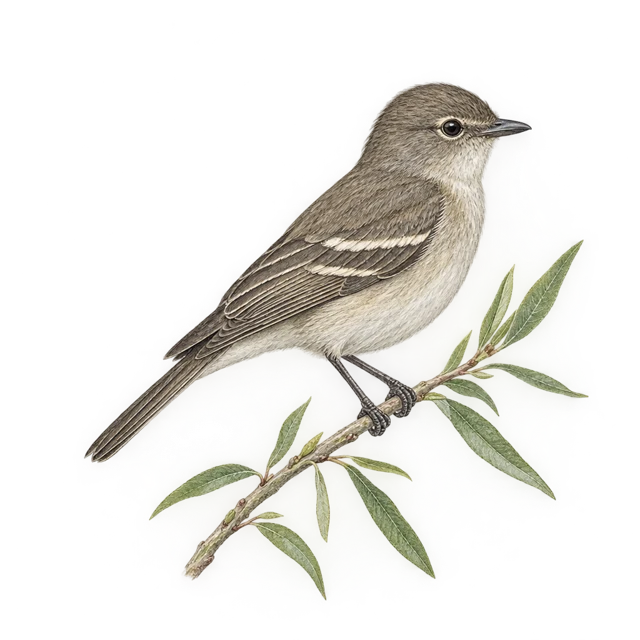
Brownish-olive to gray-green above, with light wingbars and a pale throat. Vocalizations are important for identification among similar flycatchers.
Southwestern United States · Central America
Empidonax traillii extimus
A summer voice in riverside thickets.
Water and dense vegetation shape the breeding habitat of this migratory flycatcher. Its voice is especially useful when separating it from similar-looking birds.
Federal ESA · EndangeredSouthwestern subspecies
Habitat & seasonal context
Brownish-olive to gray-green above, with light wingbars and a pale throat. Vocalizations are important for identification among similar flycatchers.
Nesting vegetation can include willow, cottonwood, or tamarisk near wet soils, standing water, or streams. Local conditions shape the habitat.
A summer breeder in the United States, it migrates to Central American wintering areas and is generally gone by the end of September.
Natural history: USFWS species account.
Conservation status
The endangered listing covers Empidonax traillii extimus, the southwestern subspecies of Willow Flycatcher.
Federal list checked September 23, 2026. View the current federal list.
Altered river flows, habitat loss, and fire can reduce or disrupt breeding areas. Vegetation used during migration may differ from nesting habitat.
Federal status is one part of the picture. State listings and project requirements vary by location.
Read further
Sources reviewed September 23, 2026.